Category: Uncategorized

@dmin
May 14, 2026
Best Pre-Wedding Locations in Nepal (2026)
May 14, 2026

Nepal is one of the world’s most breathtaking stages for love stories. Whether you dream of snow-capped Himalayan peaks, glittering alpine lakes, centuries-old temple courtyards, or terraced hillsides glowing at golden hour — pre-wedding locations in Nepal offer a lifetime of moments in a single landscape. This guide covers the 10 best spots for pre-wedding photography in Nepal in 2026, with GPS coordinates, best seasons, and insider tips.

1. Phewa Lake, Pokhara

GPS: 28.2096° N, 83.9560° E

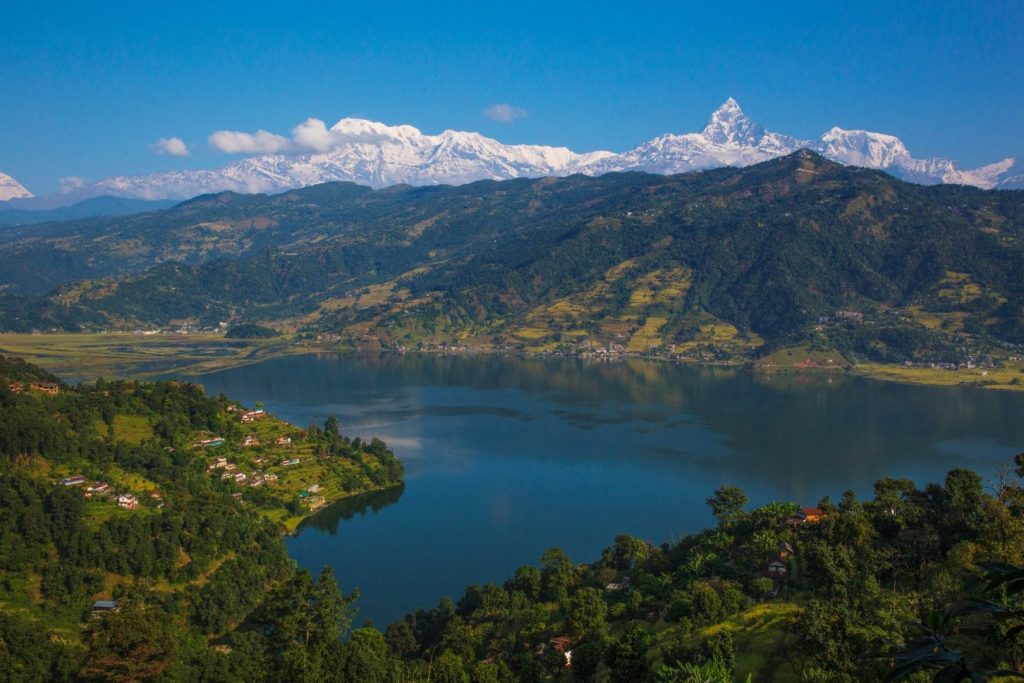
Phewa Lake is Nepal’s most iconic pre-wedding backdrop. The calm, reflective surface mirrors the Annapurna range and the gilded Tal Barahi Temple, creating a natural dual-frame that no studio can replicate. Sunrise shoots here are legendary — soft pink light doubles across the water while wooden rowboats drift lazily in the background.

Best season: October–November, February–April Best time: 6:00–7:30 AM Tip: Hire a wooden rowboat and shoot from the water looking back at the Annapurna reflection.


2. Nagarkot Viewpoint

GPS: 27.7150° N, 85.5197° E

At 2,195 metres, Nagarkot commands sweeping views of over 13 Himalayan peaks including Everest and Langtang. As a pre-wedding location in Nepal, it’s unmatched for grand alpine backdrops — brilliant white summits floating above a sea of clouds while you stand silhouetted on an open ridge. The atmosphere shifts minute to minute, giving photographers a constantly changing gallery of light.

Best season: October–March Best time: Sunrise, around 5:45 AM Tip: Stay overnight so you’re already at the viewpoint before dawn — day-trippers always miss the best light.


3. Pashupatinath Temple Area, Kathmandu

GPS: 27.7104° N, 85.3486° E

The ghats and garden terraces surrounding Pashupatinath offer an ancient, warm-toned world entirely unlike any other pre-wedding location in Nepal. Ochre-painted temples, carved wooden struts, sacred marigolds, and the Bagmati river’s soft haze create a timeless atmosphere. Couple shoots here work beautifully in traditional Nepali or Indian attire.

Best season: Year-round Best time: 4:30–6:00 PM Tip: Shoot in the Mrigasthali garden across the river — it’s quieter, greener, and offers a beautiful framed view of the main temple complex.


4. Gosainkunda Lake

GPS: 28.0897° N, 85.4166° E

Nestled at 4,380 metres in Langtang National Park, Gosainkunda is Nepal’s most ethereal high-altitude lake. Surrounded by glaciers and steeped in Hindu mythology, it offers an otherworldly setting that looks like it was art-directed for a film. The cobalt blue water, rugged rocky shoreline, and dramatic cloud formations make for intensely cinematic pre-wedding photographs.

Best season: May–June, September–October Access: 2-day trek from Dhunche Tip: Pack light, coordinated outfits in warm tones — they contrast beautifully against the cold blues of the lake and sky.


5. Mustang’s Red Cliffs & Lo Manthang

GPS: 29.1836° N, 83.9697° E

Upper Mustang is Nepal’s hidden masterpiece — a trans-Himalayan rain shadow desert of eroded terracotta cliffs, cave monasteries, and ancient walled kingdoms. The light here is unlike anywhere else in Nepal: dry, sharp, and golden. The whitewashed walls of Lo Manthang against a deep blue Tibetan sky produce frames that look like oil paintings. A pre-wedding shoot here is a once-in-a-lifetime experience.

Best season: June–October (only accessible in monsoon, as it lies in rain shadow) Permit required: USD 500 Restricted Area Permit Access: Fly to Jomsom, then drive or trek north Tip: Bring bold, solid-coloured outfits — the landscape is so dramatic that busy patterns get lost.


6. Bandipur Historic Town

GPS: 27.9358° N, 84.4145° E

Frozen in the 18th century by design, Bandipur’s pedestrian bazaar is lined with exquisitely maintained Newari merchant houses, latticed wooden windows, and carved stone water spouts. As a pre-wedding location in Nepal it is criminally underused. Its cobblestone lanes and ochre facades offer a European-village-meets-Himalayan aesthetic, and the cliff-top viewpoint adds a mountain panorama just minutes away.

Best season: October–April Drive from Kathmandu: 4 hours Best time: 6:00–9:00 AM before day visitors arrive Tip: Combine the town’s heritage lanes with the Tundikhel hilltop for two completely different looks in one shoot day.


7. Shivapuri National Park Ridgeline

GPS: 27.8010° N, 85.3680° E

Just 30 minutes from Thamel, Shivapuri’s forested ridgeline at 2,700 metres offers lush green canopy, moss-covered rocks, and private clearings with Himalayan views — all without leaving Kathmandu district. It’s perfect for couples who want a natural, botanical atmosphere: dappled forest light, secluded glades, and dewy morning mist rolling through the trees. Extremely photogenic in both monsoon green and autumn gold.

Best season: Year-round Entry fee: NPR 250 per person Best time: 7:00–10:00 AM Tip: The trail towards Nagi Gompa has the best light-through-canopy moments in the early morning.


8. Chitwan Elephant Grasslands

GPS: 27.5822° N, 84.4977° E

For something cinematic and completely different, the terai grasslands of Chitwan National Park deliver safari-style romance on Nepal’s southern plains. Tall elephant grass at sunset, the wide Rapti River at dusk, and the warm lowland light create a visual palette unlike anything in the mountains. Unique, warm, and wildly romantic — especially for couples who want to stand out.

Best season: October–March Drive from Kathmandu: 5 hours Tip: The Rapti River banks at sunrise with river mist are extraordinary — book a resort right on the riverfront and start early.


9. Changu Narayan Temple Complex

GPS: 27.7162° N, 85.4142° E

Nepal’s oldest Vishnu temple and a UNESCO World Heritage Site, Changu Narayan sits atop a forested hillock crowned with the most intricate stone and wood carvings in the Kathmandu Valley. The terracotta courtyards, ancient sculptures, and elaborately carved windows provide a richly detailed, deeply photogenic backdrop. Far less crowded than Bhaktapur Durbar Square, yet even more atmospheric.

Best season: Year-round Best time: 7:00–9:00 AM and 4:00–6:00 PM Entry: NPR 300 Tip: Arrive at opening — by 9 AM local visitors and pilgrims fill the courtyards, but the first hour is nearly yours alone.


10. Annapurna Base Camp Trail — Ghandruk & Chomrong

GPS: 28.3793° N, 83.8055° E

For couples with adventure in their hearts, sections of the Annapurna Base Camp trail offer the most dramatic Himalayan pre-wedding photography imaginable. Rhododendron forests in March and April turn the hillsides blazing crimson and pink. Stone-paved trails wind past traditional Gurung villages, with Machhapuchhre’s near-perfect pyramid hovering above it all. These are photographs that last a lifetime.

Best season: March–May (rhododendrons), October–November (crystal clarity) Access: Drive to Nayapul, trek 3–4 hours to Ghandruk Permits required: TIMS card + ACAP permit Tip: Ghandruk village itself — with its stone houses and mountain backdrop — is one of the most underrated couple photography settings in all of Nepal.


Final Thoughts

Nepal’s diversity as a pre-wedding photography destination is unmatched anywhere in Asia. Within a single country you can shoot in Himalayan snowfields, tropical jungle, ancient desert kingdoms, and living heritage cities — sometimes within the same week. The key is planning ahead: permits, trekking logistics, and the right season make or break a shoot.

At PhotoshootNepal, we handle every detail so you can focus entirely on each other. Explore our pre-wedding photography packages to find the right fit for your vision — from intimate half-day Kathmandu valley sessions to multi-day adventure shoots deep in the Himalayas.


Ready to start planning? Browse our pre-wedding portfolio, check 2026 pricing, or explore our dedicated Kathmandu shoot guides.
@dmin
June 5, 2025
Canon EOS R50V Review
June 5, 2025

May 23, 2025 | Mark Goldstein |     

  1. Introduction
  2. Ease of Use
  3. Image Quality
  4. Sample Images
  5. Product Images
  6. Rating & Conclusion
  7. Main Rivals
  8. Review Roundup
  9. Specifications
  10. Comments (1)

Latest Reviews

CamerasLenses

https://www.photographyblog.com/iframes/camera

Introduction

The Canon EOS R50 V is a new entry-level mirrorless camera aimed at content creators who want to upgrade from their smartphone, compact camera or DSLR to a more capable device.

It is a video-first camera designed for for vloggers, streamers, and influencers that want high-quality footage with the minimum of fuss.

It offers 4K/60p recording (cropped to 64% of the horizontal area) oversampled from 6K and Full HD footage at frame rates up to 120p in 4:2:2 10-bit quality.

There’s also Canon Log 3 for greater flexibility in post-production colour grading, custom colour profiles, 4-channel audio, and a vertical tripod mount. The LIVE button allows you to quickly access your streaming options, and go live within seconds.

It has a 24.2 megapixel APS-C CMOS sensor which is partnered with the very latest Digic X processor.

12fps burst shooting is available when using the R50 V’s first-curtain electronic shutter and 15fps when using the silent electronic shutter, both with continuous auto-focus and auto-exposure.

The native ISO range runs from 100-3200, which can be expanded to ISO 51200, and the top shutter speed is 1/8000sec.

Thanks to its Digic X processor and Dual Pixel CMOS AF II autofocus system, the EOS R50 V offers the same deep-learning artificial intelligence based automatic face, eye, animal and vehicle AF tracking modes as the full-frame R3, R5 and R6 and the APS-C R10 models.

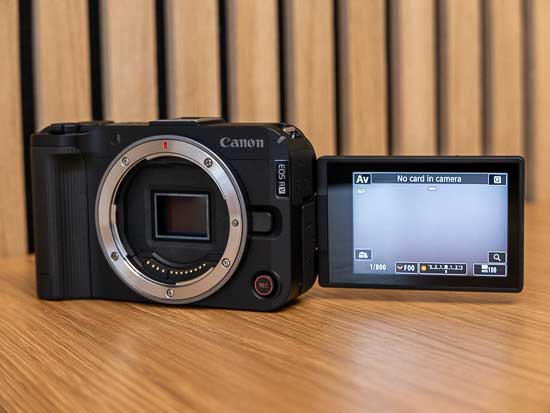
The Canon R50 V features a 3-inch 1,040K dot resolution LCD vari-angle monitor with a touch-screen interface. There is no viewfinder on this model.

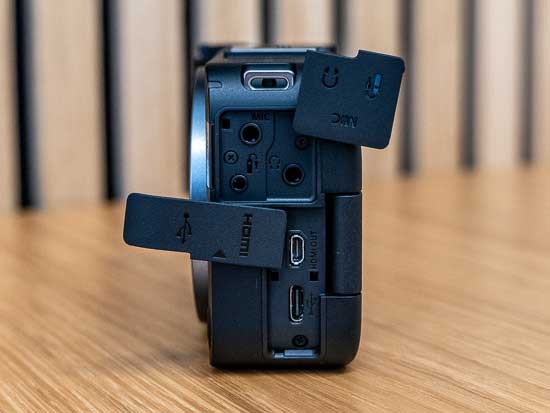
There’s also a UHS-II SD memory card slot, built-in Wi-Fi and Bluetooth connectivity, USB 3.2 Type-C connector, micro-HDMI port, microphone and headphone ports and the latest multi-function accessory shoe.

The Canon EOS R50 V is available in black only priced at £729.99 / €829.99 / $649.99 body only in the UK, Europe and USA respectively, £959.99 / €1,099.99 / $849.99 with the RF-S 14-30mm F4-6.3 IS STM PZ kit lens, and £999.99 / €1,149.99 in a special Content Creator Kit. It is made in Japan.

Ease of Use

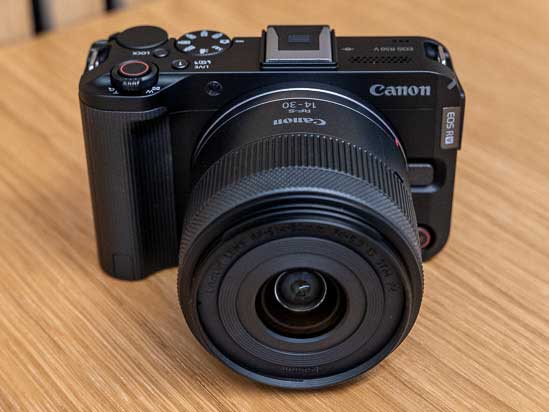
Canon EOS R50 V

As its name suggests, the new EOS R50 V shares a lot if its core DNA with the EOS R50 model that was released in 2023 – it just takes a different, more video-focused approach in terms of its design and control layout.

It is still predominantly targeted at people who are either completely new to photography or those who have outgrown the capabilities of their smartphone or simpler compact camera, just more oriented towards recording video rather than capturing stills.

The Canon R50 V offers the ability to record up to 4K/60p video in 4:2:2 10-bit quality with dual-pixel auto-focus and auto-exposure for up to 2 hours, although at 60fps it is unfortunately cropped to 1.56x / 64% of the horizontal area which gives a frame similar to Super 35mm. Also note that while 4K/30p is oversampled from 6K, 4K/60p isn’t.

Full 1080 slow-motion recording at up to 120p with autofocus is also available (but no sound), which is actually something that even the flagship EOS R5 doesn’t offer.

Both live streaming on YouTube and vertical video capture are supported, the latter being ideal for reels and stories. Canon have also included zebra display during movie shooting, which can be used as a guide to exposure adjustment, especially for highlights.

Inherited from the R50 is a rather Sony-inspired video shooting mode called “Movie for close-up demos”, which as the name suggests can be used to automatically focus on anything that you hold up to the camera during recording, and then focus back on the subject when the object is removed from the frame or moved backwards.

Canon EOS R50 V

The R50 V supports Movie Digital Image Stabilisation (IS), an extra Digital IS mode called Enhanced which helps to keep handheld footage sharp. Note that it achieves this by applying a crop that’s even more aggressive than the one applied in the normal Digital IS mode, so you’ll ideally need a wide-angle lens to use it.

New video-centric features on the R50 V which aren’t on the original R50 include Canon Log 3 for greater flexibility in post-production colour grading as well as Canon709, Cinema Gamut and HLG profiles, a headphone jack that allows you to monitor the audio, and a dedicated vertical tripod mount on the side of the camera that’s in addition to the one on the bottom.

Joining the the R50, R10 and R7 models, the EOS R50 V is the fourth Canon APS-C crop sensor mirrorless camera to use the same RF lens mount as the company’s full frame cameras.

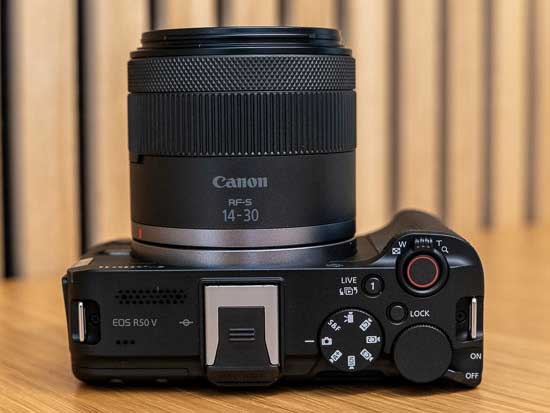
You can use Canon’s relatively new range of RF-S lenses which are designed specifically for the R50, R50 V, R10 and R7 (and all future Canon R-series APS-C cameras). This includes the new RF-S 14-30mm F4-6.3 IS STM PZ kit lens that ships in a bundle with the R50 V.

Or you can use the more established full-frame RF lenses, with an accompanying change in the focal length due to the 1.6x crop factor involved with mounting full-frame lenses on an APS-C sensor.

In addition, Canon’s huge number of EF and EF-S DSLR lenses can also be used with the R50 V and R7 by attaching the optional EF-EOS R Mount Adapter, which is very handy if you already have a large collection of legacy lenses.

Canon EOS R50 V

The 24.2 megapixel sensor in the Canon EOS R50 V is a re-engineered version of a sensor design that has previously been used in many Canon models, including the Canon EOS M50 Mark II, the Canon EOS 850D and the Canon EOS R10. It’s also exactly the same as the sensor inside the R50.

Commendably the R50 V benefits from using the latest and greatest Digic X processor, just like the more expensive R10 step-up model.

The ISO range for stills runs from 100-32,000, which can be further expanded up to ISO 51,200, exactly the same as the EOS R50. For video it goes up to ISO 12,800, expandable to ISO 25,600.

The EOS R50 V is the latest Canon camera to support Dual Pixel RAW. This allows correction of the focus and contrast in the background using the Background Clarity mode and changing the lighting in portraits via the Portrait Relighting mode after capture, just using your finger/thumb on the EOS R50 V’s touchscreen LCD.

Somewhat amazingly at this price point, the Canon R50 V features exactly the same next-generation Dual Pixel CMOS AF II focusing system as used by the flagship R3 and R5 full-frame cameras and its EOS R50, R10 and R7 APS-C siblings.

It has 651 automatic focus points and 4,503 manually selectable AF points, 100% frame coverage in Auto selection mode and 90% vertical and 100% horizontal in manual selection.

Canon EOS R50 V

Impressively the EOS R50 V can focus in light levels as low as -5EV (when used with an F1.2 lens) or with maximum apertures as small as f/22, which enables autofocus even when using ultra telephoto lenses with teleconverters.

Shutter speeds as fast as 1/4000s are supported using the mechanical shutter and up to 1/8000s using the electronic shutter, which is slightly slower than the 1/16,000s speed offered by the R10.

Thanks to its Digic X processor, the EOS R50 V offers exactly the same deep-learning artificial intelligence based automatic face, eye and animal AF tracking modes as the R3, R5, R6, R7, R10 and R50 models.

The Canon R50 V can recognise and track eyes, and it works even if the person is wearing a mask, helmet or sunglasses. Subject tracking works for humans and also dogs, cats and birds, the latter even in flight.

The EOS R50 V also has the ability to track vehicles, including cars and motorbikes. What’s more, if the driver is wearing a helmet, the AF system will lock on to that, ensuring that the most important subject is in focus. 

Turning to the R50 V’s continuous shooting speeds, the camera can shoot at a fast 15fps for 95 JPEG / 36 RAW images when taking advantage of the silent electronic shutter, complete with full AF and AE tracking, which is 8fps slower than the R10 camera (23fps). Slightly slower 12fps burst shooting is available when using the R50 V’s mechanical shutter/1st curtain electronic shutter which is maintained for 140 JPEG / 59 RAW images.

Canon EOS R50 V

The R50 V’s buffer compares badly to the Canon R10, which allows bursts of up to 460 JPEG or 29 RAW images when using the mechanical shutter at 15fps and 70 JPEG or 21 RAW images when using the electronic shutter at 23fps, but it it a lot better than the R50 thanks to the new UHS-II card support.

Note that the R50 V features a mechanical shutter. However, like the R50, it is electronic first curtain only which allows stills to be captured without rolling shutter artifacts.

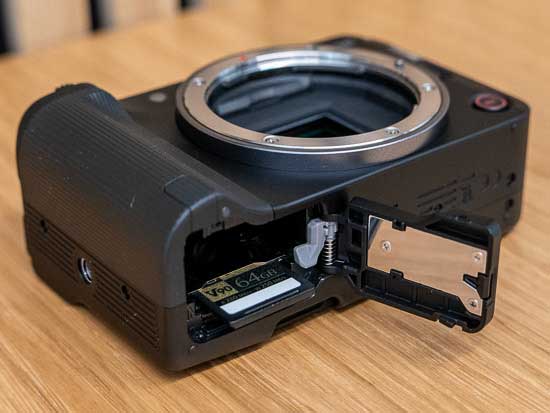
The R50 V camera only has a single, rather out-dated UHS-I SD card slot that’s rather inconveniently housed in the same compartment as the battery, a direct consequence of the camera’s small, compact design.

Just like the R50, in-body image stabilisation is unfortunately not supported by the Canon R50 V. Instead you have to rely on a mix of lens stabilisation (if the lens offers it) and/or in-camera digital stabilisation.

The R50 V is Canon’s latest EOS camera to support the ‘next generation’ HEIF (High Efficiency Image File) file format, enabling images with 10-bits of data to be saved in a file the equivalent size of a JPEG, while suffering less compression. 

RAW files can be shot in tandem with JPEGs (or indeed HEIF files) as per usual – here with Canon’s own .CR3 (Canon Raw) file extension, which requires the likes of Photoshop or Lightroom to access and open.

Canon EOS R50 V

The EOS R50 V has a largely plastic body rather than the more substantial mixed polycarbonate/magnesium-alloy body used by the more expensive R7.

The R50 V doesn’t offer any level of weather-proofing, so you’ll need to jump to the R7 if you need this feature. Note that all the RF-S zoom lenses released to date are also similarly not weather-proof.

The R50 V measures 119.3 x 73.7 x 45.2mm and weighs in at 370g with both a battery and memory card fitted, making it quite a lot smaller than the Canon R50 (116.3 x 85.5 x 68.8mm) but only 5g lighter despite not having a viewfinder.

Due to rather its diminutive stature, the Canon R50 V suffers from having a rather shallow handgrip, but unlike the R50 it does at least comfortably accomodate three fingers. It’s also finished a nice tactile rubberized material that further aids grip.

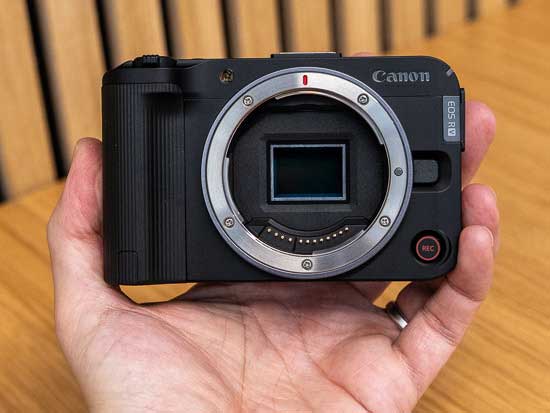
There is one prominent control found on the R50 V’s minimalist front plate, joining a porthole for the AF assist light and a lozenge shaped button for releasing the lens. This is a brand new REC one-touch movie record button which makes it much easier to record yourself than having a button on top of the camera.

Also new for the front of the EOS R50 V is a tally lamp in the top-right corner which lights up red when recording which is a very useful addition.

Canon EOS R50 V

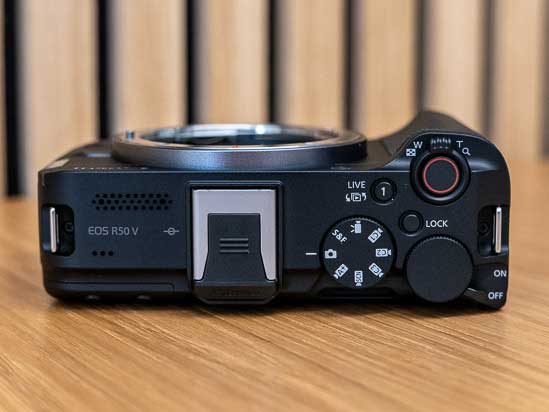
On top of this camera is a conventional shooting mode dial on the right-hand side to change the shooting mode, but unlike the R50 the focus here is very much on video rather than stills, which are relegated to a single position.

The usual P, Tv, Av and M options are still available, but you have to delve into the menu system to select them, joined by the Bulb and Scene Intelligent Auto modes plus six different scene modes.

Instead there are seven different video shooting modes on the dial, which include Slow&Fast, movies, C1, C2 and C3, movie scenes (smooth skin movie, movie for close-up demos, movie IS mode) and movie auto.

There’s a small On/Off switch over on the far-right, with the camera leaping into life almost instantly. The camera intelligently remembers separate settings for each of the movie and various stills settings.

There’s a second responsive video record button at the top of the handgrip which doubles up as the shutter release for stills, with a new wide/tele power zoom toggle switch encircling it which works in tandem with any PZ lens including the new 14-30mm that was sent to us for review.

The Multi-Function Shoe on top of the camera provides data communication and power for accessories such as the ST-E10 Speedlite Transmitter, DM-E1D Stereo Microphone, and AD-P1 Smartphone Link Adapter, as well as acting as a traditional hotshoe for existing Speedlites and triggers via the AD-E1 Multi-Function Shoe Adapter.

Canon EOS R50 V

Unlike the R50 model, Canon have not included a handy built-in flash on the R50 V.

Completing the top of the R50 V are two new buttons, one for instant live streaming and the other for locking the camera’s current settings. There is no ISO button as found on the R50, again reflecting the video-centric focus of this model, while the control dial has been moved to the rear falling more naturally underneath your thumb.

The R50 V doesn’t have either a second control dial or an AF joystick, as on the EOS R10, which reflects the fact that this particular model is targeted more at beginners and smartphone users.

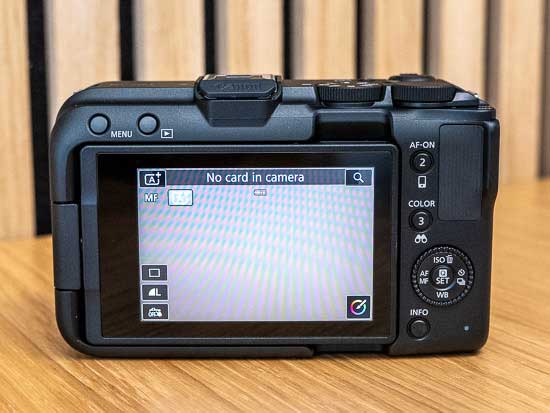
Turning to the rear of the camera, there are Menu and Playback buttons located above the LCD screen, with all the other controls over on the right-hand side.

Next to the rather slim thumb-grip are the AF-On button and a Color button for for quick access to various video gammas, above a spinning dial which has specific functions at left, right, up, down and the Q/Set button in the centre which opens the Quick Control screen and provides instant access to 10 key camera controls.. The Info button is below this dial.

The 0.39 inch, 2.36 million dot EVF on the EOS R50 V isn’t the most

@dmin
June 5, 2025
Best Photography Blogs of 2025
June 5, 2025

The best photography blogs make you want to keep scrolling.

Photography blogs for beginners can instruct on technical basics, inspire with captive imagery, and demonstrate how the craft can be used for both storytelling and information-sharing. Journalistic photography, food photography, travel photography, wedding photography… There’s no shortage of avenues for blogs on photography to take.

While what constitutes the best photography blogs depends greatly on personal preference, we’ve compiled 22 sites that no doubt will make the top of many lists this year.

1. Agora Gallery

If one day you’d like your work shown in a gallery, it’s worth checking out Agora Gallery.

While the general site covers more than just photography, its page devoted to the art form can inform creatives about what it takes to get a studio space or gallery showcase. Never a bad idea to better understand the marketing and promotional side of the craft.

Instagram: @agoragallery (57.6K followers)

2. Beers & Beans

Why put up with airline delays and poor currency exchange rates when you can experience the splendor of the world from the comfort of your own home? 

Travel photographer’s blogs have never been more popular, and Beers & Beans is an example of how successful this type of blog can be. Not only is the site a popular draw, but also the founders of it have contributed to publications such as National Geographic and USA Today.

Instagram: @beersandbeans (3K followers)

3. Behind the Shutter

Did someone say “free photography education?” As its name implies, Behind the Shutter aims to help aspiring shutterbugs learn the craft techniques necessary to capture images that awe and inspire. Along with other photography blogs for beginners, this one offers tips and tricks that can help you become a more proficient snapper. 

Instagram: @btshutter (11.9K followers)

4. Chase Jarvis

Countless photographers try to make a name for themselves with their work online and through social media. Many of them turn to Chase Jarvis as an example of how to actually do it. 

This acclaimed creative has branched out beyond just posting his work; he also interviews others who have triumphed in their respective fields and offers an insider’s look at their successes.

Instagram: @chasejarvis (100K followers)

5. Colossal

Colossal expands beyond just photography to cover other art forms such as crafting and design. 

The site covers a host of creative disciplines, but photography purists will have no shortage of stunning imagery through which to browse. Colossal has travel, portrait, nature, and many other genres of photography to study and admire.

Instagram: @colossal (522K followers)

6. Creative Boom

Creative Boom is another “little bit of everything” site and one of our best photography blogs you should consider bookmarking. The site also provides interviews, gear recommendations, book reviews, and additional instruction for photographers of all skill levels.

Instagram: @creativeboom (93.3K followers)

7. Dave Morrow Photography

There may never be another landscape artist like  Ansel Adams, but Dave Morrow is working hard to fill the void. 

Putting together a list of photographer’s blogs? Morrow’s is not to be left off. The beauty of his imagery will enthrall, and his thorough advice may help you one day take shots just as captivating.

Instagram: @davemorrowphoto (2.5K followers)

8. David duChemin

David duChemin is a book author, instructor, podcaster, and of course photographer. 

This self-proclaimed “creative instigator” is certainly that if instigating the passions and dreams of other would-be photographers counts. Head over to his site to both be astounded by his craft and open to learning more about it.

Instagram: @davidduchemin (38.6K followers)

9. ExpertPhotography

If you’re putting together a list of blogs about photography, you can’t pass up a site with a name like ExpertPhotography. As its name implies, this blog provides comprehensive advice to beginning and veteran creatives alike on how to start or improve upon their photography hobby or career. 

Instagram: @expertphotography (60K followers)

10. Expert Vagabond

Travel photography encompasses far more than simply booking a ticket to a stunning destination, and Expert Vagabond knows that. 

This site makes our compilation of best photography blogs becauset it offers practical advice on how to safely, economically, and successfully become a travel photographer.

Instagram: @expertvagabond (138K followers)

11. The Fashion Camera

Love photography and fashion? Then make sure to add The Fashion Camera to your list of blogs on photography. 

Here you can get not only craft tips specific to fashion photography, but also insights into what this particular profession entails. Of course, the site offers stunning fashion-centric pics as well. 

Instagram: @liselottefleur (12.8K followers)

12. Feature Shoot

Worried we haven’t covered any fine art photography blogs? Well, meet Feature Shoot. In fact, this site has a dedicated “fine art” page. However, that label applies to nearly any image you can find on this blog on photography. Every featured genre page—portraits, still life, and more—is so exquisite that each clearly demonstrates mastery of the craft. 

Instagram: @featureshoot (222K followers)

13. Fiona Kelly Photography

Wedding photography is big business. Fiona Kelly Photography, named for the wedding photographer herself, offers a candid look into what this career can offer. 

Be sure to add it to your list of photographer’s blogs if you’re also looking for practical shutterbug tips specific to this industry. 

Instagram: @fionakellyphoto (3.5K followers)

14. Ignant

Not so interested in the articles that some of the best photography blogs have to offer? If you’re a purist who just wants to look at beautiful pics, look no further than Ignant.

Ignant keeps copy to a minimum so you can focus on those eye-grabbing photos.

Instagram: @ignant (892K followers)

15. The Phoblographer

With the overwhelming amount of photography

This website uses cookies to improve your experience. Cookie Policy